
Wedding Ceremony Program Wording: A Complete Template
Wedding ceremony program wording with copy-ready order, wedding-party, memorial, cultural, unplugged, and thank-you examples.
Wedding planning editorial team
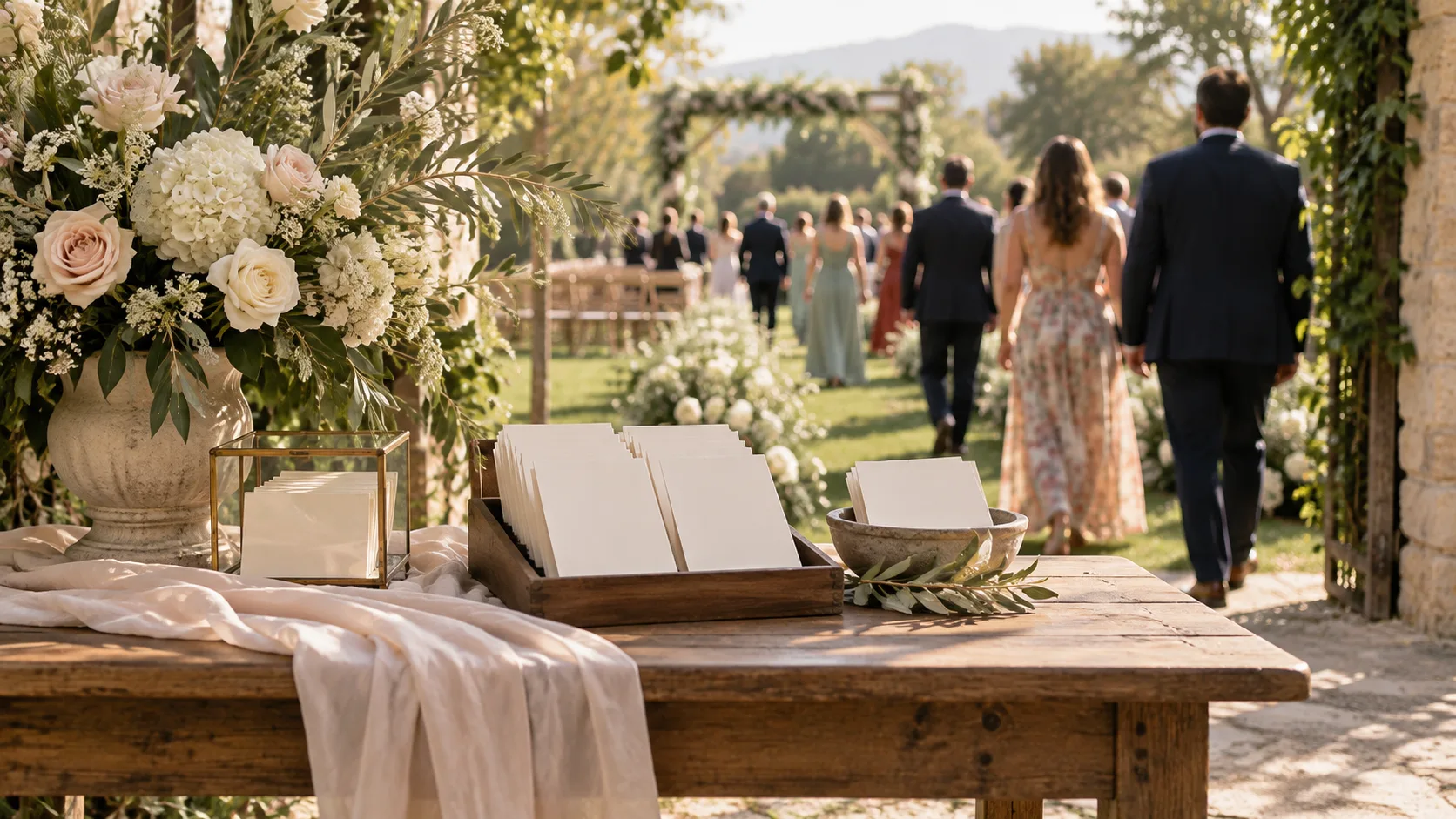
Clear wedding ceremony program wording tells guests who is involved, what will happen, and how to take part. It is not a transcript. Include the ceremony order, names, and short explanations for traditions guests may not know.
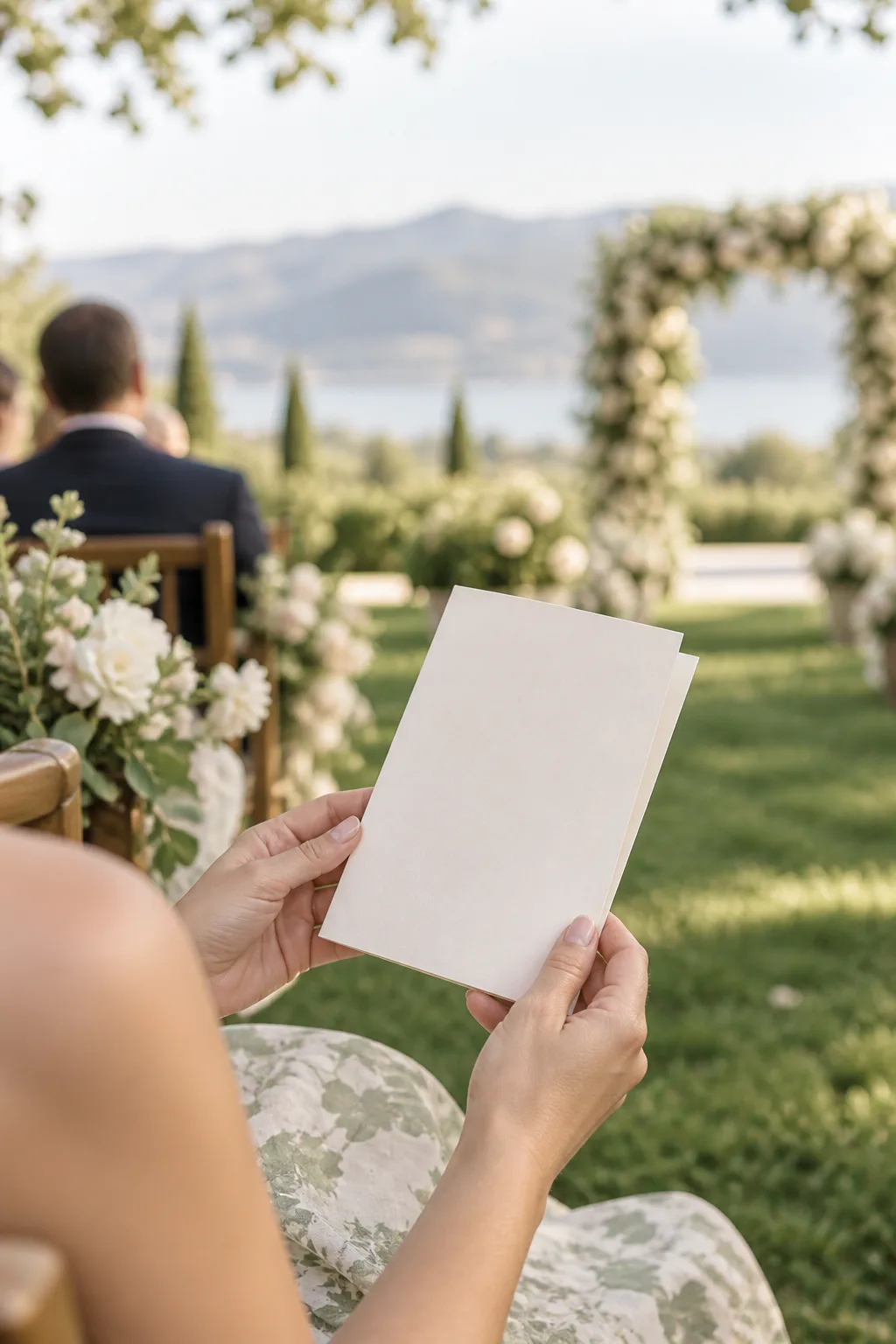
A simple wedding program template
Front
The wedding ceremony of
[Name] and [Name]
[Day, date]
[Venue, city]
Ceremony order
- Prelude
- Processional
- Welcome
- Reading
- Exchange of vows
- Exchange of rings
- [Cultural or religious tradition]
- Pronouncement
- Recessional
Only list moments that actually appear. Use specific song or reading titles when they help guests understand the ceremony.
Wedding party
Officiant — [Name]
Parents of [Name] — [Names]
Parents of [Name] — [Names]
Honor attendants — [Names]
Wedding party — [Names]
Readers and musicians — [Names and roles]
Ask every person how they want their name and title displayed. Do not guess honorifics or family relationships.
Closing note
“Thank you for being here and for the many ways you have supported us. We are grateful to begin this next chapter with you.”
Wording for an unplugged ceremony
“Please silence and put away phones and cameras during the ceremony. We invite you to be fully present with us.”
Keep this instruction short and ask the officiant to repeat it. Read our full unplugged ceremony wording guide for softer and more direct versions.
Wording to explain a tradition
Use two or three factual sentences written or reviewed by someone who understands the tradition. Explain what guests will see and whether they should stand, respond, or remain seated. Avoid reducing a meaningful practice to decorative language.
Memorial wording
- “We remember with love those who could not be with us today.”
- “In loving memory of [Name or names], whose presence remains part of our family.”
- “We carry the love of [Name] with us today.”
Confirm names and tone with close family before printing. If you have a separate display, wedding memory table ideas offers gentle options.
Printing and accessibility tips
Use readable type, strong contrast, and enough spacing. A large shared sign may work better than individual programs for a very short ceremony, while printed copies are useful when guests need responses or translations.
Print a small number of extras and place them where guests naturally enter. Recycle or collect unused copies after the ceremony.
FAQ
What should a ceremony program include?
Names, date, ceremony order, participants, short tradition notes, and necessary instructions.
Do you need one?
No, but it helps when the ceremony includes several people or unfamiliar elements.
How do you list divorced parents?
Put each current preferred name on its own line and confirm it directly.
How long should it be?
One folded sheet or double-sided card is enough for most ceremonies.
Related reading
Keep building the rest of the workflow
Unplugged Ceremony Wording: Signs, Programs & Officiant Scripts
The kindest unplugged request explains the reason, names the time phones can return, and is repeated at the ceremony entrance.
18 Wedding Ceremony Exit Ideas That Look Great in Photos
Choose an exit that is safe for your venue, quick for guests to understand, and still feels like you.
Wedding Menu Wording Ideas for Every Reception Style
A wedding menu should be readable first. Then use the wording to make the meal feel like part of the celebration.