
Family Reunion Photo Sharing: Collect Every Generation’s Best Photos
Family reunion photo sharing makes it easier to collect candid photos from every branch of the family without chasing individual uploads after the gathering.
Event guestbook editorial team
Key takeaways
- Family reunion photo sharing works when every branch of the family has one simple private place to add photos, with one reminder at the meal.
- Ask for the full group photo, smaller family-branch photos, kids playing, food traditions, and photos with older relatives.
- Pair older relatives with a helper and welcome spoken or written memories from anyone who prefers not to use a phone.
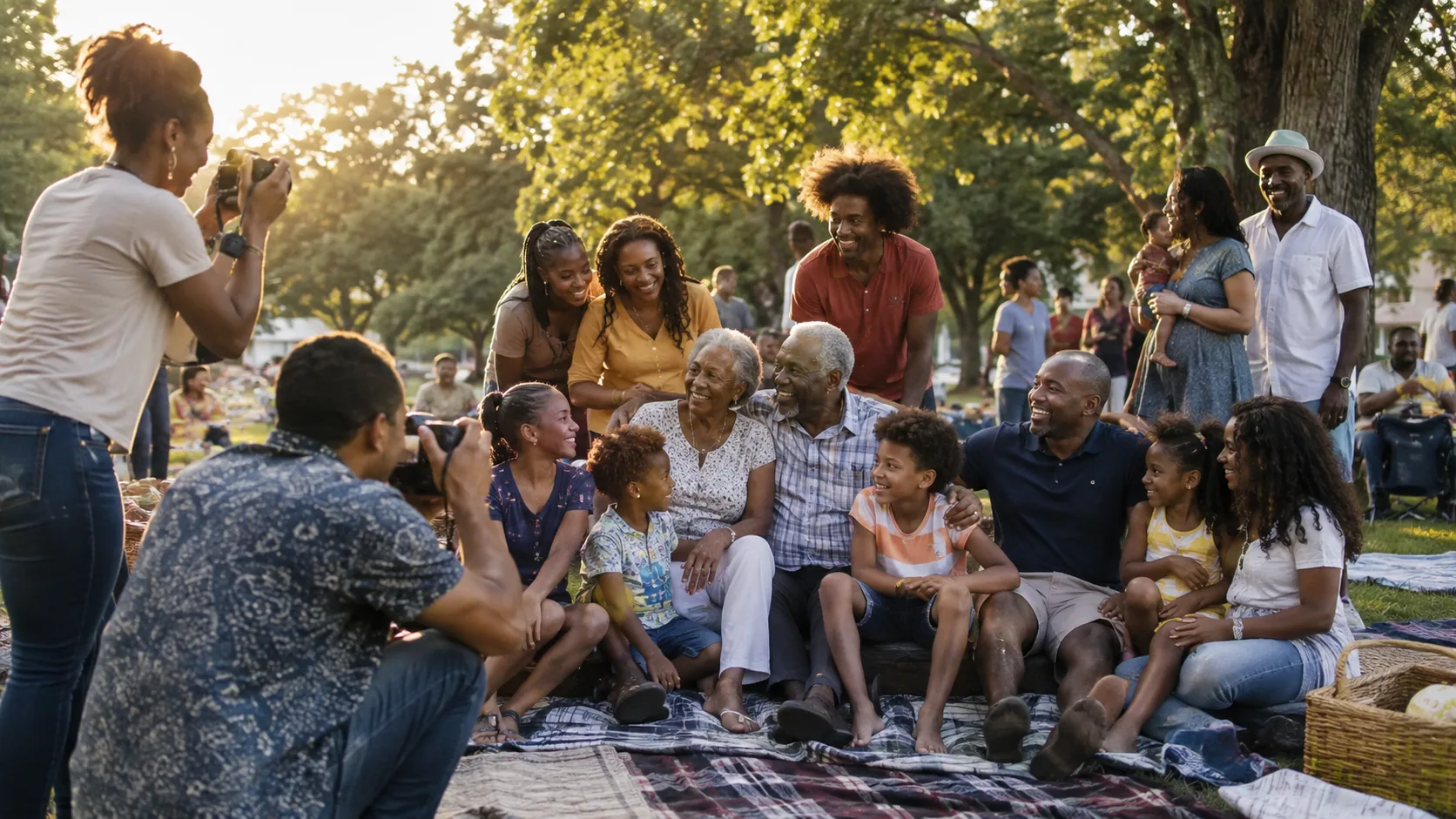
Family reunion photo sharing is less about building a perfect album and more about keeping the moments no single person can see. One cousin is with the kids, another is catching up with an aunt, and grandparents may be telling stories at a picnic table. A shared collection helps those moments come back together after everyone goes home.
The simplest plan is a private place for relatives to add one or two favorite photos, plus a gentle reminder at a moment when everyone is already gathered.
Make a short family photo list
Do not hand everyone a long shot list. Pick the moments that will matter most later:
- A full group photo before people leave.
- Each branch of the family together.
- Grandparents or elders with children and grandchildren.
- Candid conversations and old friends reconnecting.
- Food, games, traditions, and the place where you gathered.
Give one or two people the job of making sure the group photos happen. Then let everyone else add the candid moments they naturally see.
Give relatives one easy way to share
People are much more likely to add a photo during the reunion than to remember an album link next week. Keep the invitation personal:
Add one photo from today so we can remember the reunion from everyone’s point of view.
Put that near the welcome table, picnic food, or group-photo spot. A family member can mention it before the big group picture. The goal is to make sharing feel like part of the reunion, not a technical task.
OnceRoll offers a focused Photo Guestbook for this kind of occasion. The host creates it from the iOS app and guests join from a modern phone browser without a guest account or app. Photo limits and a controlled reveal can keep the collection manageable while still giving every family member a chance to add their view.
Include people who do not use phones often
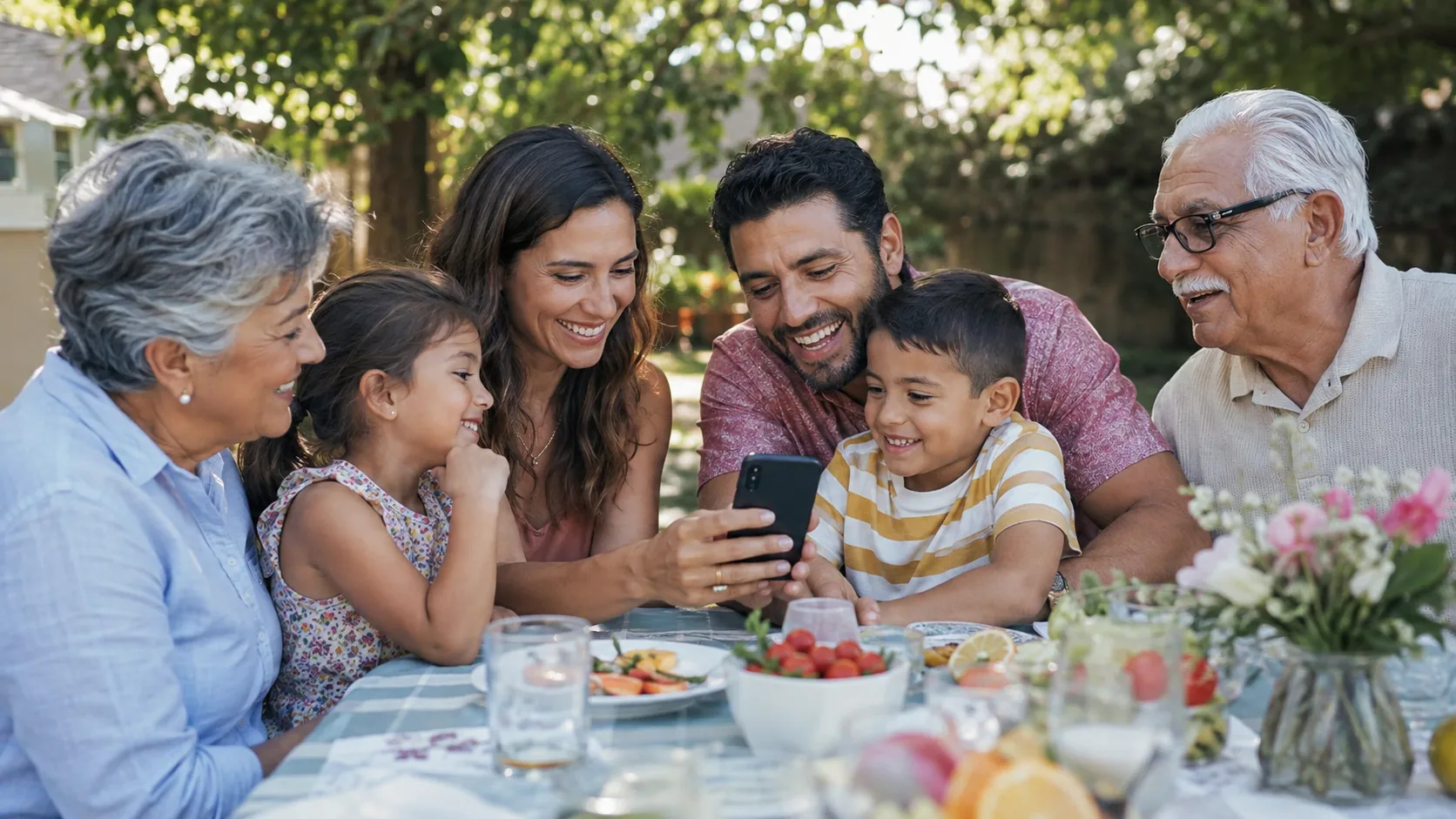
Ask a tech-comfortable family member to be available for anyone who wants help. Better yet, pair grandchildren and older relatives for a quick photo or recorded story. Not everyone needs to contribute digitally. Someone can write down a memory, tell it to a relative who records it, or simply be in the picture.
For more ideas about memory formats beyond photos, look at these anniversary party guest book ideas. Voice and short video can be particularly valuable when family stories are the point.
Protect the time together
Set the sharing plan up before the reunion, then put your phone down. The collection should help you keep the day, not make you spend the day moderating it. Save the sorting for later, when you can enjoy seeing the small scenes that happened across the yard or across the room.
If you are hosting another event with relatives, the same approach works for birthday party photo sharing: one clear request, one private place to contribute, and one friendly reminder.
A reunion plan that does not need a coordinator all day
Before the day, make one person responsible for the must-have group photo and one person responsible for the sharing invitation. Those roles can be quick: the group-photo person gathers people for five minutes before dessert; the sharing helper answers questions and encourages the first few uploads. Nobody should spend the reunion staring at a screen.
Choose a time for the full group photo early enough that people are still there but late enough that most relatives have arrived. Then take the smaller family branches right afterward while everyone is already gathered. If children are restless, let the photos be imperfect. A real laugh or someone looking away is usually a better memory than a perfectly organized row.
Prompts that help people look beyond the group photo
Use a few optional prompts to spread the camera around the reunion:
- Take a photo of a tradition your family repeats.
- Capture a conversation between two generations.
- Share a candid of someone telling a story.
- Add a picture of the food everyone associates with this family.
- Photograph a place you want to remember from today.
These prompts are useful because they invite people to notice what makes this particular reunion different. They also make room for relatives who do not enjoy posed photos but love documenting details.
Keep names and context with the photos
When you look through the collection later, make a small note of who is pictured in the group photos, especially for younger relatives. A file full of pictures becomes much more valuable when future family members can understand who they are looking at. You do not have to caption every image; start with the large group, older relatives, and any story that deserves to travel with the photo.
If a relative has old printed pictures, make time for a quick scan or a phone photo of them during the reunion. Pairing those images with new candid photos can create a beautiful then-and-now collection without needing a formal archive project.
Let the collection travel home with everyone
After the reunion, share a small group of favorites with the family and keep the full collection private. A few well-chosen images can make someone who missed the day feel included, while the full set remains a richer record for the people who attended. Thank relatives for adding their photos; it signals that their point of view mattered.
The next reunion will be easier to document because people will remember what happened to the last set of images. Over time, this simple habit can become one of the family’s best traditions.
Keep the invitation personal
Family members respond best when the request explains why their image matters. Instead of “upload photos,” try: “Please add one picture that shows what this family feels like to you.” That framing welcomes both big group photos and small details. It also reminds everyone that the reunion is being remembered by more than one person.
If the reunion is annual, reuse the same simple photo ritual. People will start anticipating it, and the growing collection will show children changing, new partners joining the family, and elders who remain at the heart of the gathering.
For a once-in-a-lifetime reunion, ask each branch of the family to add at least one photo before leaving. That small shared responsibility gives you a much fuller record without handing the entire job to one person.
FAQ
How do I collect photos from a family reunion?
Give family members one simple private place to add their favorite photos, then remind people once near the group-photo or meal moment.
What photos should we take at a family reunion?
Take a full group photo, smaller branch-of-the-family photos, candid conversations, children playing, food traditions, and photos with older relatives.
How do I get older family members involved in photo sharing?
Pair them with a relative who can help, keep the instruction short, and also welcome written or spoken memories from people who prefer not to use a phone.
Related reading
Keep building the rest of the workflow
Event Photo Sharing App: A Better Way to Collect Guest Memories
An event photo sharing app should make one shared collection feel simple for guests and useful for the host—without a trail of forgotten upload links.

40 Wedding Hashtag Sign Wording Ideas That Get Guests Sharing
A wedding hashtag sign works when guests can see the tag, understand what to share, and use it without having to ask a question.
Wedding Hashtag Ideas: 120 Examples and How to Pick One Nobody Else Is Using
The best wedding hashtags are short, read cleanly in lowercase, and don't already belong to a stranger. Here's how to build one, with 120 examples.