
Private Wedding Photo Sharing: How to Collect Guest Photos With More Control
Private wedding photo sharing helps you collect candid guest photos without making your memories public. Learn what to decide before you invite guests to contribute.
Event guestbook editorial team
Key takeaways
- Private wedding photo sharing means guests contribute to a collection only invited people can see, not a public social feed.
- Decide the kind of privacy you want first, then whether guests see photos live or at a later reveal.
- A private browser link or QR code lets guests share directly without posting, and works for every generation.
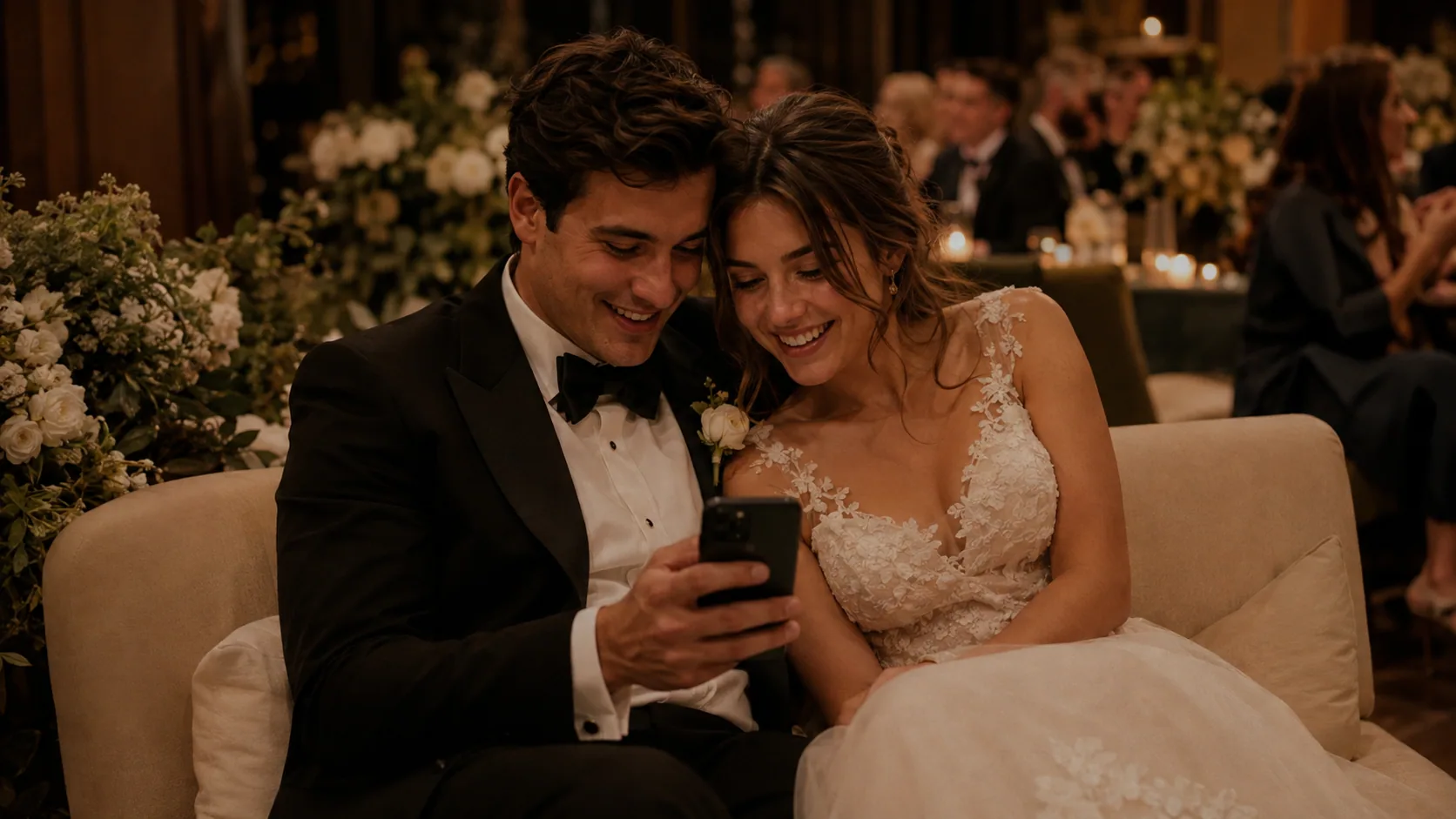
Private wedding photo sharing means you can collect the candid photos your guests take without making your wedding memories part of a public social feed. You decide who receives the invitation, what kind of contribution you want, and whether the final collection is visible during the event or saved for later.
Privacy does not have to make the guest experience difficult. In fact, a focused private collection can be easier than asking people to remember a hashtag, find the right shared album, or send pictures days after the wedding.
Start with the kind of privacy you want
There is no single “private” setting that works for every celebration. Decide which of these matters most to you:
- A private invitation: Only guests with your link or QR code can join the event.
- A limited collection: Guests contribute photos, but the experience is not a public social post.
- A controlled reveal: You choose whether to see photos as they arrive or enjoy them after the celebration.
- A clear purpose: Guests know the photos are for the couple’s memory collection, not general online sharing.
Be clear with guests if there are moments you do not want photographed, such as the ceremony, children, or a private family tradition. A short note is kinder and more effective than expecting people to guess.
Make the invitation feel safe and simple
The wording matters. Tell guests what the collection is for and what you hope they will add:
Share one candid moment from today for our private wedding memories.
That invitation is warmer than a technical request. It also gives people permission to contribute something ordinary and real, not only a polished portrait.
Use the same invitation on a welcome sign, a small table card, and a short spoken reminder. For practical placement ideas, see how to collect wedding photos from guests.
Choose live viewing or a later reveal
Live viewing can make guests feel connected to the collection. It is especially fun for a smaller party where people enjoy seeing a few early arrivals or dance-floor moments. A later reveal is often better if you want to experience the images together after the noise of the day has settled.
Neither approach is more private by itself. The important thing is that guests know what to expect and you feel comfortable with the plan. If you choose a reveal later, say so in the invitation: “We cannot wait to open these after the wedding.”
OnceRoll lets an iOS host create a Photo Guestbook with a private guest flow. Guests join from a modern phone browser without a guest account or app, while the host chooses shot limits and a controlled reveal. It is one way to keep participation simple while keeping the focus on the memories, not public posting.
Help every generation take part
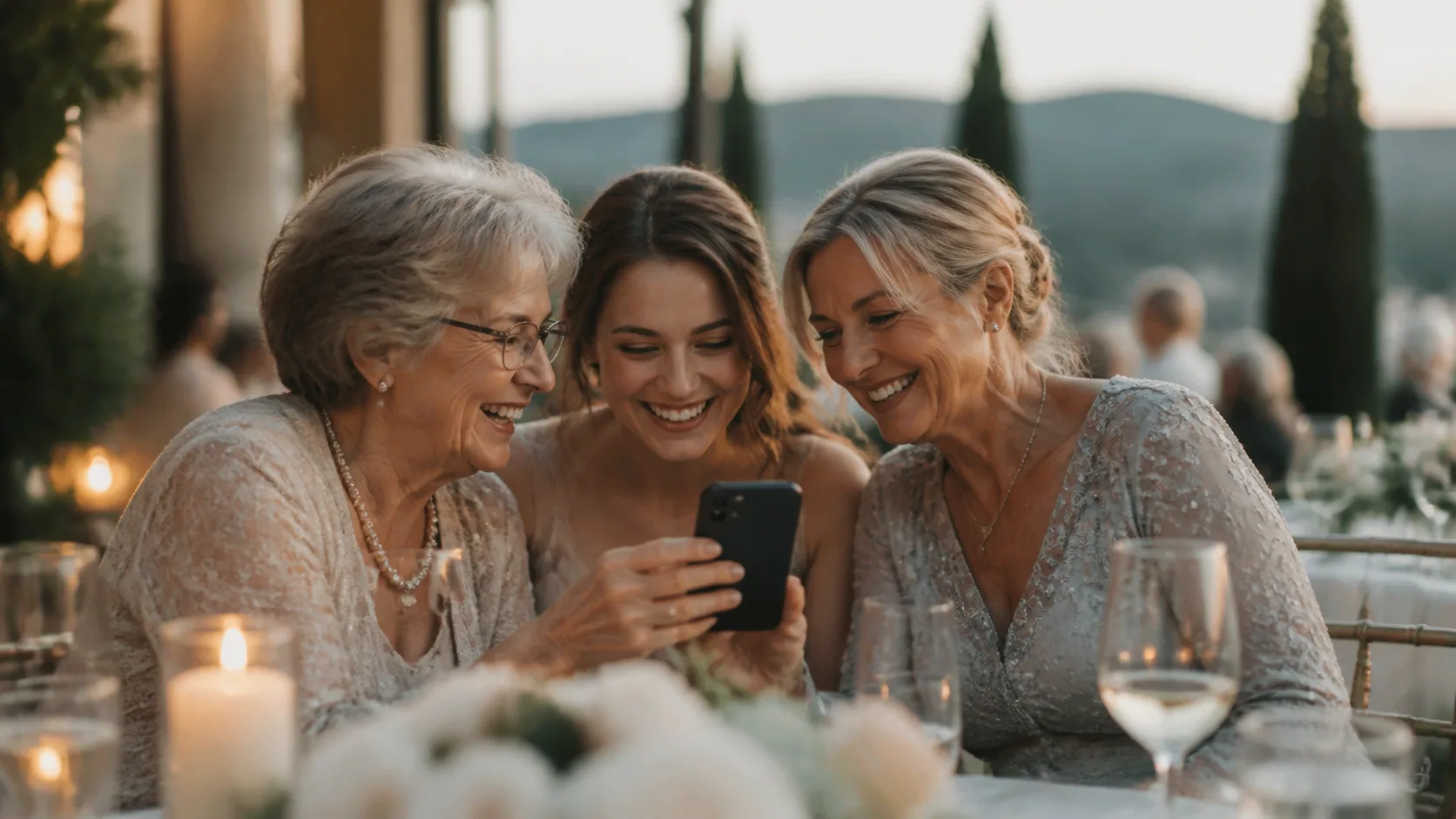
Private does not have to mean complicated. Ask a wedding-party member to help anyone who is unfamiliar with scanning a code or selecting a photo. You can also keep a small paper version of your prompt nearby: someone may prefer to write down a memory for you even if they do not want to use a phone.
Avoid giving guests a long privacy policy at the reception. If there is a meaningful boundary, state it in one clear sentence. For example: “Please keep ceremony photos off social media until we share ours.” Then make it easy to add their favorite moments to the private collection instead.
Build a collection you will revisit
The strength of a private photo collection is not only control. It is context. You are more likely to receive the unguarded photos that make a wedding feel like yours: cousins at a quiet table, a parent watching a speech, friends laughing before the dance floor fills up.
Pair this plan with a wedding photo sharing checklist so the invitation is ready before guests arrive. Keep the request narrow, keep the access simple, and let the people who love you show you the day from their side of the room.
A private sharing plan to agree on together
Talk about privacy before you choose a platform or print a sign. One partner may love a live photo wall while the other wants to see nothing until the morning after. One family may be comfortable with candid photos while another would rather not have children or ceremony moments shared at all. There is no wrong preference; the useful part is agreeing on it before guests arrive.
Write down the decision in plain language. For example: “Photos are for the couple’s private collection,” “please do not post the ceremony,” or “we will open the gallery after the reception.” A short explanation is easier for guests to respect than a list of rules. It also gives the friend helping with the guest book a clear answer if someone asks.
After the wedding, consider whether you want to share selected images back with family. You may choose to send a favorites album, print a small set for parents, or simply keep the full collection for yourselves. Privacy is not about hiding a joyful day; it is about being deliberate about who holds the memories and how they are seen.
A note about guest comfort
Private sharing works best when guests understand that they are welcome to participate but never required to perform. Some people love taking pictures; some prefer to stay in the moment; some do not want to be photographed at all. A good host respects all three. Keep the invitation open, avoid calling people out, and make sure a guest can move through the party without having to interact with the photo plan.
This approach also makes your boundaries easier to follow. If a guest asks whether a picture can go on social media, a simple answer is better than a complicated rule: “Please share it in our private collection instead.” You are giving people a positive place for the image to go, not only telling them what not to do.
The result is a collection built on trust. That feeling matters when you look through it later; the best candid memories are often the ones people shared because the setting felt thoughtful.
Choose a respectful photo moment
If you have a ceremony, a family blessing, or another moment where you prefer people to be present without phones, say so before it begins and offer a later moment for guest photos. This gives everyone a clear alternative: enjoy the important part in real time, then share the candid celebration afterward. A private collection supports this boundary because guests know their photos still have a home.
FAQ
What does private wedding photo sharing mean?
It means using a guest photo collection that is shared with the people you invite instead of publishing wedding photos openly on a public social feed.
Should wedding guest photos be visible right away?
That depends on your preference. A live view can add energy, while a later reveal lets you enjoy the collection as a surprise after the wedding.
How can guests share wedding photos without a social media post?
Give guests a private browser link or QR code that leads to the event collection, so they can contribute directly instead of posting publicly.
Related reading
Keep building the rest of the workflow
Wedding Hashtag Ideas: 120 Examples and How to Pick One Nobody Else Is Using
The best wedding hashtags are short, read cleanly in lowercase, and don't already belong to a stranger. Here's how to build one, with 120 examples.
17 Wedding Moments Your Photographer Might Miss
Your photographer cannot be everywhere at once. A few thoughtful guest-photo prompts can preserve the small perspectives happening all around you.
Bridal Shower Photo Sharing: A Simple Way to Keep Every Sweet Moment
A bridal shower is full of small moments that one host cannot see. Give guests an easy way to add their favorite photo without interrupting the day.